

Mold and MCS

I’ve been fighting yet another mold battle for most of this year.  I’ve done this enough now that you’d think I’d be an expert with a lot of wisdom to share.  What I’ve learned, though, is that there’s very little agreement in the mold illness community about even the basics, like the best testing methods, remediation practices, or the nature of mycotoxins (poisons produced by certain molds).  So, I write this post with trepidation, knowing that whatever I say is likely to meet pushback from some corner of the mold illness world.  I don’t write as a mold expert, by any means, but I can share my experiences, both with fighting mold and with how it overlaps and intersects with Multiple Chemical Sensitivity (MCS) or chemical toxicity in general.  I hope there’s something helpful in here somewhere.  Here are some of the things I’ve observed or experienced:

1.     Toxins are toxic, whether they’re biological or synthetic, and it’s not always easy to determine what’s affecting you.  I used to think I could tell.  There were a handful of symptoms that I identified as being my mold symptoms, but this time around, I didn’t have them, despite the fact that testing showed a very potent mold in the house and extremely high levels of a dangerous mycotoxin in my body.  Evidently, the mold exposure was adding to my toxic load and keeping my chemical sensitivity active, but not causing obviously different symptoms.

One possible explanation for this is that there are thousands of different types of mold (some say over 100,000, and some estimate there may be more than a million) and they can have very different properties and effects.  Molds can be allergenic, pathogenic, or toxigenic.  There have been times in the past when I’ve walked into a building with obvious mold issues (generally, I could smell it), but when I’ve mentioned it to others, I’ve been told that there couldn’t be mold, because the person I’m talking to has mold allergies and isn’t reacting.  Despite my frustration with that, I guess I basically did the same thing to myself by failing to recognize the mold in my house this time because I didn’t have my usual symptoms (and couldn’t smell or see anything problematic).

The overlap of symptoms that can be caused by mold (especially toxigenic types) and chemical toxins can be especially problematic for people focusing on avoiding one of the two.  My social media feed is often full of people who discovered mold in their home, escaped and moved to a new one (often a brand-new building, because they think the risk of mold is lower), and then found themselves just as sick as they were in their previous home.  They often first assume the new house has mold (which is certainly possible, since new houses aren’t always as mold-free as you would think), but then they gradually start suspecting that they’re reacting to the chemical offgassing of their new place.  They ask, “How do I know?” and there’s no good answer. 

I’ve sometimes seen this go the other direction, too.  Someone with chemical intolerance is unable to stay in their home, so they escape to an older building (or sometimes a travel trailer), where they fail to improve, because there’s hidden mold somewhere, which they later discover.  The bottom line is that in order to be healthy, we have to do our best to avoid toxins of both types – biological and synthetic.  There’s really no shortcut.
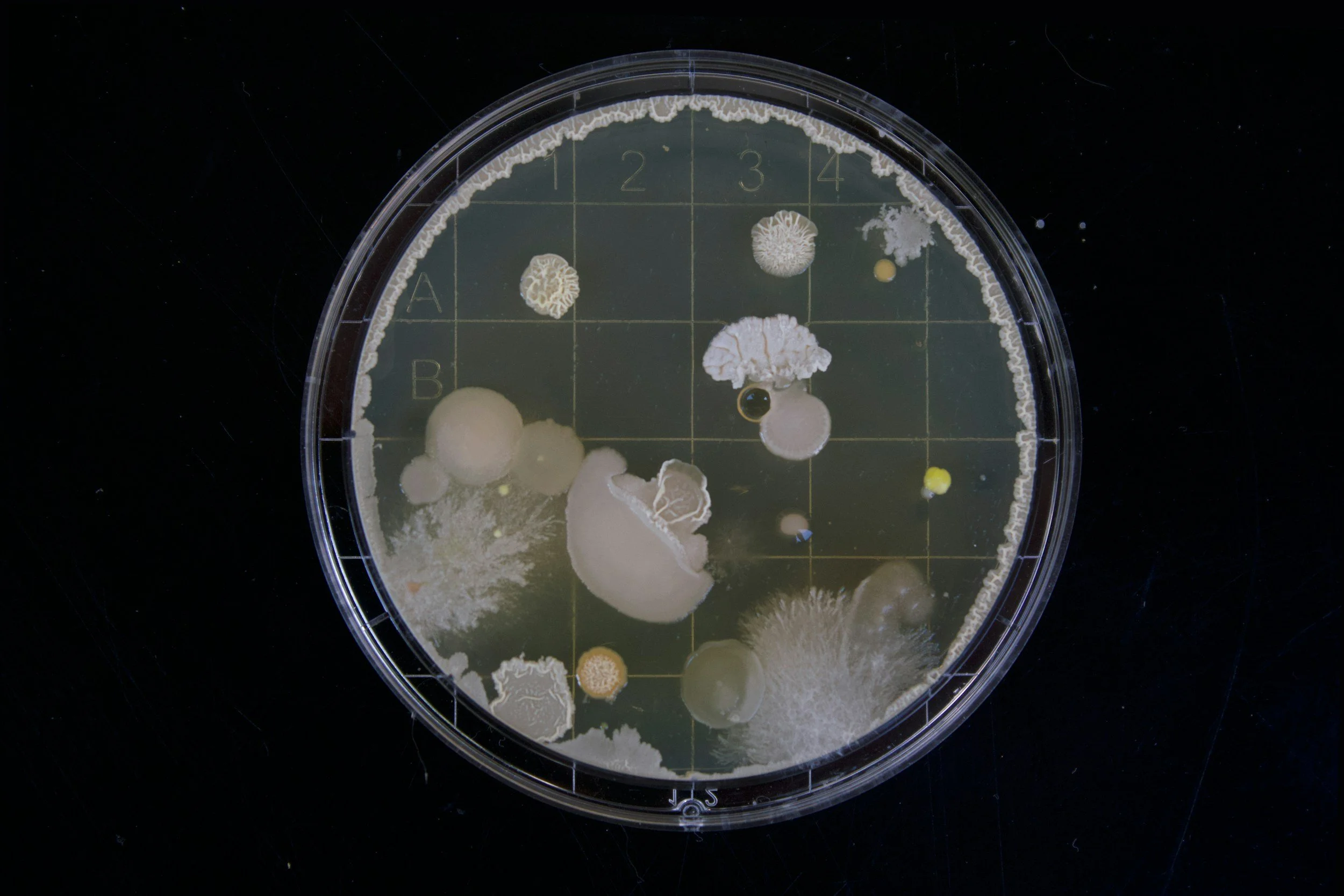
2.     Figuring out what’s in the air inside our homes and other buildings is easier said than done.  There are many different types of mold testing, and each type has its defenders and detractors.  I think it’s safe to say that none are perfect, and all can sometimes miss a problem. 

Testing for chemical contaminants has gotten better, but is also still imperfect.  The staggering number of synthetic chemicals that are produced is certainly part of the problem.  When I wrote my book, I said there were about 80,000 synthetic chemicals identified, which was the number generally agreed upon at the time.  Now, however, we know that there are over 350,000 synthetic chemicals registered for production and use.  The number of chemicals most commonly used is smaller, but still in the thousands, and commercially available testing isn’t able to recognize them all.  Also, testing for VOCs (volatile organic compounds) has improved, but there are many, many classes of problematic chemicals that aren’t VOCs, including some pesticides, heavy metals like lead, and endocrine disruptors like phthalates and parabens.   

There are pros and cons to all testing methods, and what seems best in one situation may not fit another.  My current personal approach is to focus on testing my body.  When people begin trying to avoid toxins, they often start with changing their food and personal care products, which are certainly important and logical places to start.  I’ve heard people say, though, that they’re focusing on what’s going into their body, and not on what’s around their body.  This is a false dichotomy, because if it’s around us, it will soon be in us.  Airborne contaminants can reach our bloodstream within minutes of being inhaled. Also, airborne particles can fall onto our food, and be consumed along with it.

3.     Air filters are important and helpful, for both mold and chemical issues, but not a solution in and of themselves.  There’s no substitute for source control (i.e. keeping the problematic substances out of the building). For mold, the source of the problem has to be found, and contaminated building materials have to be carefully (professionally, under containment) removed.  For chemical contamination, sometimes offgassing can be contained or addressed in other ways, such as baking off, but sometimes, like with mold, the source of the problem just needs to go away. 

4.      Source control is important, but generally not the end of the story.  Once the source of the problem is removed, contaminants may still remain. What I’ve been doing for a good part of this year is removing porous items in my home (things made of foam, fabric, paper, wood, etc.). The idea is that mycotoxins that were circulating in the air have now become embedded inside them.

The same problem exists with many synthetic chemicals.  Air fresheners come immediately to mind.  I recently took a trip and needed to stay overnight along the way.  I asked the managers of a campground on my route if they had any fragrance-free cabins.  They replied that they could remove the air freshener and open the windows for me.  I appreciated their offer, but didn’t think it would work.  Lacking any other options, though, I gave it a try.  As expected, the air freshener chemicals had permeated everything, and the room seemed almost as fragrant to me as if the fragrance chemicals were still actively being pumped into the room.

To understand this concept, it can be helpful to read about the effects of “third-hand” cigarette smoke.  This is the smoke residue that clings to walls, furniture, and other surfaces in an environment where cigarettes have been smoked, and which has been linked to serious health concerns.  The same principle applies to other chemical contaminants and to mold.  Residue can remain for a long time and continue to be a problem if it isn’t thoroughly removed.

5.     Even though neither mold illness nor chemical intolerance is an allergy, in the truest sense of the word, making a home or other building “allergy-friendly” can help with both.  Basically, this means controlling dust, which is composed of little bits of whatever is in the building.  Mold spores travel in dust, and the synthetic chemicals in your house can be found in the dust, as well.  Carpet is a major dust reservoir, and really not a good idea for a healthy house.  Hard, non-porous surfaces are the easiest to keep clean, and metal and glass furnishings tend to be inert and good for both avoiding mold and chemical contamination.  The fewer upholstered pieces, the better.  Furniture with removable, washable cushions (or at least cushion covers) is a step in the right direction.

6.     Controlling humidity is important.  Most people know that mold needs moisture to grow.  What is less well-known is that high humidity can accelerate the offgassing of VOCs and can also cause certain chemicals to react with each other and form new compounds.  Most experts recommend trying to keep the humidity inside a building between 40 and 60%, with some saying that aiming for under 50% is a good goal. 

7.     In addition to controlling dust, it’s important to address gases.  This means you need air filters with not only HEPA or similar filtration, but also carbon or another media that will trap gaseous pollutants.   It once seemed to be the common consensus that mycotoxins are gases, but the current understanding seems to be that they aren’t, and that they generally hitch a ride on small particles.  On the other hand, mold can produce VOCs (often called MVOCs), which are indeed gases and can have toxic properties themselves.  And, of course, many chemical contaminants are gases, which can only be trapped by the proper type of filtration.

8.     There are times when focusing on chemical safety can make the process of addressing mold more complicated. For example, the mold illness community often talks about the importance of replacing clothing and other porous items frequently.  This can be very challenging for people with chemical sensitivity, because we can often only tolerate certain fabrics, and even what we’ll eventually be able to tolerate often has to go through a long period of processing and offgassing before we can use it.  Once we make something MCS-safe, we aren’t particularly inclined to get rid of it.

Plastic is a special problem.  People addressing mold are often advised to store things in plastic totes.  In many ways, this makes sense.  It’s good to contain items to keep them from becoming dusty and contaminated, and plastic is less porous and likely to be affected by mold than cardboard, for example.  On the other hand, more than 16,000 chemicals are associated with plastic production, with many thousands of them being designated as “chemicals of concern” because of their potential health risks. Some of the most well-known of these chemicals, including phthalates and BPA, are primarily detoxified through the glucuronidation detoxification pathway.  This is also one of the primary pathways the body uses to process mold.  In other words, if your body is already working hard to eliminate mold from your body, it may have fewer resources than normal to deal with all the chemicals in your new plastic totes.

There’s no one-size-fits-all answer to this issue.  Hard plastic (like acrylic) is less problematic than soft.  Metal storage solutions exist, and I’m actually finding them to be cheaper and more available than they used to be.  Also, the most direct answer to the storage issue is to simply let go of more worldly goods and store less stuff (which, of course, leads back to the problem of wanting to hold onto items once they’re MCS-safe, because they aren’t easy and quick to replace.)

If all of this seems overwhelming, I get it.  Trust me, I do.  I’ll just tell you what I tell myself: We can only do our best, every step forward matters, and, most importantly, avoiding toxins can make enough of a difference to our health and wellbeing that it’s well worth doing. 

2023

Yes, it’s December and this is my first blog post of the year. I have lots of them floating around in my head, but I’ve had trouble getting them out into the world. I appreciate those of you who’ve checked on me to see what I’ve been doing instead of writing. Here are a handful of the reasons I’ve been missing from the blogosphere.

  1. I wanted a better way to manage my email list and contact those of you who signed up to get notified when I publish a new post. (I’m very grateful for all of you and your interest!) Unfortunately, my brain is old and starting to balk at learning new things, especially when it comes to technology. I managed to get about 80 percent of my contacts imported into a new program, then it started glitching and I just didn’t have the patience to figure it out. Every time I thought about writing a post I would also think “but I have to figure out the email thing first.” I didn’t want to have to figure it out, so it became easier not to write. (And no, I still haven’t completely switched to the new system, but I’m going to write this post anyway.)

  2. I’ve been experimenting with other ways to get my message across and trying to figure out what’s most effective. Besides writing this blog, I post short toxin-related news items on Facebook and X and I comment on other people’s posts when appropriate. I’ve kept up with those efforts a little better than I’ve kept up with the blog. I hope in 2024 I can manage to do both more consistently.  I also contributed a chapter to a book on grace that was published this year.

  3. I’ve been trying to free up more time to write by lowering the amount of maintenance chores in my life. I have a large yard and keeping up with it takes significant time and energy (and often means tick bites, which as a chronic Lyme disease sufferer I’d really prefer to avoid). I was determined that this would be the year that I’d finish turning all the weedy mulch nearest the house into easier-to-maintain hardscapes, so for the first part of the year, before the event I’ll talk about next, I pushed hard to get it done (while writing blog posts in my head). No, I didn’t meet that goal, either, but I made some good progress. 

  4. The biggest reason that I didn’t write much was that I spent a good portion of the year on the bottom rungs of Maslow’s hierarchy of needs. As I mention in my book, the basics of food, clothing, and shelter are all hard to manage for people with chemical sensitivities, and shelter is probably the hardest domain to conquer for most of us.

    What happened for me this time around is that the chimney flashing started to leak, a roofer came to repair it, and that set off an unfortunate chain of events. I’ll spare you the full story, but the short version is that I had pain and other symptoms that were significantly worse when I was in certain parts of the house. A little sleuthing led to the surprise discovery that there was a big gap above a duct that led from my living space into the attic, so attic air was freely flowing in. What I finally deduced was that the roof work must have stirred up some mold-laden dust (there was probably mold in the roof decking from the leak) and the spores and mycotoxins made their way into my breathing space. 

    Many people with chemical sensitivities are also very sensitive to mold. It's hard to describe, for people who aren’t highly reactive to it, how little exposure it takes to cause severe inflammation and how much cleaning goes into making a place tolerable again after a mold event. There are various names for the process in the mold community, but I’ve always called it ESI cleaning, which means “every square inch.”  There are a lot of square inches in a home and all its contents, and sometimes the whole process has to be repeated multiple times. It probably seems ridiculous to people who can’t even see or sense the problem, but it’s what some of us have to do.

    For a while I couldn’t sleep in the house safely, and my fear was that it might turn into a permanent situation, which happened in my previous home. I no longer have the campervan I slept in then, but I do have a screen room on the back of the house which I thought I could use for that purpose. Unfortunately, I discovered a roof leak and resultant mold in there, too, so that project got added to the list. It was a lot to do, especially given how bad I was feeling, and writing didn’t happen while I was focused on it. Anyway, I’m pain free and comfortably inside my house again and I’m grateful.

That’s my personal 2023 report. On the toxin front, my award for chemical of the year (really a group of related chemicals) goes to PFAS. At this point 15 state governments have pursued legal action against companies believed to be responsible for polluting the water and soil with it. I’m always curious about why any given toxin can be ignored for decades, then suddenly break into public consciousness. My guess is that this time it was the movie Dark Waters that did it. I think we need more movies about toxins.

Microplastics have also been getting a lot of attention. I would give them runner-up status. Sometimes people call PFAS “forever chemicals” and microplastics “everywhere chemicals.” As all chemicals do, they also interact. PFAS has been found in pesticides, which they pick up from the plastic containers they’re stored in.

If you’ve read all this and you’re interested in toxins and in my life, I’m truly grateful for you. Thanks for being with me on this journey.  Stay tuned.  My goal is to get one more post (that’s not about me) published before the year is over.  We shall see . . .

From my Heart to Yours

On this date three years ago, my husband's heart stopped beating. He was in his 50s, seemingly healthy and robust, and most people were genuinely shocked at his death. I didn't wake up that March morning believing that my husband would die that day, but in a general sense I was less shocked than many others seemed to be. That was partly due to life experiences (my mother died when I was young, so I grew up understanding the unpredictability of death) and partly due to understanding some of his risk factors.

I'm going to mark this anniversary by writing about heart disease and talking about some lesser known causes. At some point I'm going to talk about a risk factor or two that I wish Dan would have taken more seriously. I imagine that last sentence put some of you on edge. Believe me, I spent a lot of time debating whether or not to write this post, but I decided to do so for multiple reasons, including that I'd like to think that Dan would want me to.

Heart disease is the leading cause of death in the United States. The Centers for Disease Control notes that it causes one out of every four American deaths. Risk factors listed by the CDC include high blood pressure, high cholesterol, smoking, diabetes, excess weight, poor diet, physical inactivity, and excessive alcohol use. I believe these are fairly well known by the general population. There are many other risk factors, however, that are less understood.

This is by no means an exhaustive list, but some of the lesser known contributors to heart disease include the following:

Air pollution - Air pollution is a broad term, but in general, fine particulates in the air, such as from industrial and traffic fumes, are associated with higher rates of heart disease. The American Heart Association reports research showing increases in death and hospitalizations when there are higher rates of smog. ABC News reports on a study finding that being stuck in traffic more than triples the risk of having a heart attack.

Non-stick chemicals - As I've noted many times, chemicals in our consumer products are generally not tested for safety, so the health effects often remain unknown. Some, however, have been linked to heart disease, including a family of chemicals used in products such as non-stick pans and stain resistant coatings. A 2012 study found that people who had the highest rates of the chemical PFOA in their blood were twice as likely to experience heart disease, heart attack, or stroke as those with the lowest levels. Because of the bad press, PFOA is being replaced by other similar chemicals, but many health experts warn that there is no reason to believe that the newer versions are any less problematic.

Chemicals found in food and beverage containers - A 2014 study in the International Journal of Environmental Research and Public Health concluded that the chemical BPA, found in many places, including plastic bottles and in the lining of food cans, was associated with heart disease in both acute and chronic low-dose exposure situations. As with PFOA, the bad press about BPA has led to some changes, but a 2016 study found it present in 67% of cans tested.

Heavy metals - University Health News reports that researchers have implicated at least four heavy metals associated with clogging arteries: lead, mercury, cadmium, and arsenic.

Mold and other toxins found in water damaged buildings - Water damaged buildings, or those with high indoor humidity levels, tend to be breeding grounds for a multitude of organisms, including a wide variety of fungi and bacteria. Exposure can lead to chronic inflammation, which can contribute to heart disease. A study in the Internet Journal of Toxicology found an association between exposure to molds in damp buildings and high cholesterol levels.

Sleep apnea - The American Heart Association notes that sleep apnea is associated with high blood pressure, arrhythmia, stroke, and heart failure. I'm almost certain that Dan had sleep apnea, and I wish I had been successful at convincing him to get tested.

Sugar consumption - This is the big one that I worried about for years. Dr. Mark Hyman's summary of the research notes that people with the highest sugar consumption have a 400% higher risk of experiencing a heart attack than those who consume the least. Sugar (in all its various forms) is not just a problem because of its "empty calories," adding to weight without contributing nutrition, but because it is inflammatory and dangerous in and of itself.

Americans eat a lot of sugar, and the amount continues to climb. A Huffington Post article reports that the American Heart Association recommends that women cap their consumption at six teaspoons a day and men at nine, but that the average American consumes 30 teaspoons daily. There are a number of reasons for this. One is simply that American food manufacturers sweeten almost everything. I remember returning to the United States after living overseas and being astonished to find sugar in canned kidney beans. Dr. Hyman notes, "Most of us don’t know that a serving of tomato sauce has more sugar than a serving of Oreo cookies, or that fruit yogurt has more sugar than a Coke, or that most breakfast cereals — even those made with whole grain — are 75% sugar. That’s not breakfast, it’s dessert!"

Americans also eat a lot of sugar because we're addicted to it. I don't use that term lightly. Sugar affects the same reward centers of the brain that other drugs do, and produces tolerance in the same manner. People find themselves needing more and more of it to satisfy their sweet tooth and may experience withdrawal symptoms when they don't consume it at regular intervals. To quote Dr. Hyman again, " Recent and mounting scientific evidence clearly proves that sugar — and flour, which raises blood sugar even more than table sugar — is biologically addictive. In fact, it’s as much as eight times more addictive than cocaine." A 2007 rodent study reported that 94% of the animals chose sugar (or an artificial sweetener) over cocaine when given the choice.

Drug abuse is a serious and growing personal and societal problem that I don't want to trivialize in any way. An Associated Press article reports that almost 13,000 people died of a heroin overdose in 2015 and prescription painkillers killed over 17,500 people. A 2015 LA Times story reports another serious statistic: sugary drinks are linked to 25,000 deaths in the United States each year.

It seems likely that many, if not most Americans are addicted to sugar to some degree. I believe I was, until my health forced me to radically change my diet. I believe Dan was. We talked about it some through the years, and he never quite denied it, but he never quite addressed it, either. About a year before he died, he developed a persistent itchy rash that doctors had trouble diagnosing. At some point I sent him an article which suggested giving up sugar for two weeks in the case of mystery skin ailments. Not long afterwards, he remarked to me that he had decided that he wouldn't cut sugar out completely, but that maybe he would try to cut down.

I remember that conversation clearly. Dan was itchy and miserable, but not fully willing, for a a brief two weeks, to trade sugar for the possibility of relief. The basic definition of addiction is continuing to engage in a behavior despite negative consequences, and I remember feeling a wave of deep sadness and thinking, "This is a strong addiction. It could kill him." I thought there was a good possibility that his heart would cause him major problems some day, but I didn't know how soon the day would come. I think my vague thought of what might happen was that he might have a heart attack in his 60s, and that, if we were lucky, he would live through it and then maybe get serious about changing his diet.

Obviously, I don't know that sugar consumption had anything to do with Dan's sudden death. He had plenty of other risk factors, including genetic ones, and had a period of high work stress in the time period before he died, which could well have been the final straw. I'm also certainly not unaware that my own health limitations added a significant degree of stress to Dan's life. (On the flip side, I think my need to live a low-toxicity life was protective for him in some ways, as well.) I can't point to sugar and say that I know it killed my husband, but the research is clear that it is, in fact, a killer.

I'm very sensitive to "blame the victim" messages and absolutely don't want this to come across that way. This isn't blaming, but warning. It's remembering the events of this day three years ago and deeply and sincerely wanting to spare other people a similar experience. Sometimes people take things more seriously when they know people who have been affected, which is my sole motivation for sharing personal stories.

As I was debating whether or not to write this post, I ran across Leviticus 5:1, which says "If you are called to testify about something you have seen or that you know about, it is sinful to refuse to testify." Yes, it's Old Testament and no, it wasn't written about blog posts, but it convinced me. What I can offer the world these days is limited, but I can testify about things I have seen and know about.

I imagine I've made a lot of people mad by this point. To those who are mad because they loved Dan and are angry that I wrote some negative things about him, I'll simply say that I loved him, too, and miss him greatly. I've cried every day this month so far. I'll also remind you that I wrote a very different sort of post about him three years ago.

To those who are mad because in addition to harping about chemicals, I'm now harping about a very prevalent food choice which is a source of comfort and pleasure, I'll simply say that I get it. Those of us who became addicted to sugar were simply eating the standard American diet or found ourselves eating more sugar because we were avoiding fat and dietary cholesterol like the experts recommended. The sugar industry manipulated studies and public policy just like the chemical industry does today. It's easy to understand how we ended up in this place, but now that we're here, it's time to accept that there are real consequences.

I write because I care about you. Whether I know you personally or not, you matter to me simply because you've taken the time to read this post. I know other people care about you, too, and we all want your heart to keep beating for a very long time.

Nomadic Wanderings: MCS Housing Challenges

I've addressed the topic of housing for the chemically ill several times, and I'm sure I'll continue to return to the issue. People who are very reactive to chemicals and other toxins (including those produced by mold) generally find that acquiring and maintaining safe housing is one of their largest struggles and needs. This week, an online friend detailed her search for safe housing over the last few years. I've asked if I could share her story with you, because I think it illustrates the problem well. She writes:

April 2010: We left our moldy house.

June 2010: I was chased (by chemicals/toxins) out of our townhouse.

July 2010: We stayed near family while looking for a rental in a drier climate. I experienced a lot of pain there.

August 2010: We rented a wonderful home in a dry climate.

July 2011: A TERRIBLY wet spring/summer (like wetter than in 20 years) created enough outdoor mold in the woods and on the house's wooden decks (etc.) that I was having 24/7 trouble breathing, couldn't eat, etc. I camped for two weeks.

August 2011: We rented a home and I was chased out by new chemicals (plus I was feeling horrible anyway because the house was very "mediocre" and there was an airport nearby).

October 2011: We rented a home with a great outdoor environment, but indoors it harbored mold. Eventually, I couldn't breathe well or function there. I slept in the car two nights.

February 2012: We rented another place because I was desperate. (It doesn’t work well when it’s very cold, you have three kids, and you can’t breathe in your house.) I only lasted in the new place two weeks. I couldn't stop having dry heaves, plus I had other scary symptoms. I stayed in an expensive camping cabin in a nearby state park for a week or so. I had heat and a bed, but I wasn't allowed to cook in it. My husband had to drive 30 minutes to bring me food.

Friends and family helped provide an almost-all-aluminum camper for me to use. I
stayed in a campground by myself for six weeks. I had a tiny fridge and griddle and I came back to our rental home every few days for showers. I improved quite a bit during those six weeks. Then the campground owner stained all his picnic tables and sprayed his trees. But by then I could tolerate living at the rental again for another couple of weeks before it became impossible again. I bounced around to various places in my (wonderful) camper to survive April and May. I sweltered in the rental cabin a few times because opening the windows gave me asthma from wood burning and the air conditioner unit had mold.

June 2012: Someone GAVE us a Winnebago, so we camped in the Winnebago and my camper. We did three months of dry camping (yikes, difficult), then two months at campgrounds because there was a burn ban (which kept me safe from campfires) and tourist season was winding down (reducing propane exhaust, etc.) I got SIGNIFICANTLY better during this time. Not totally healed by any means, but way better.

October 2012: We began staying in this "decent" mobile home (with real wood walls, not formaldehyde-laden paneling), but with the second worst outdoor environment of our homes, which became worse over time.


January 2013: We became aware of an increasing mold problem here. It's not reasonable to ask the landlord to do anything about it (long story), especially because the outdoor environment here is so bad for me.

February 2013: I REALLY started to go downhill. The outside air here has made my camper unusable unless we move it. There's no safe place to move it that has electricity to keep it warm. We've been searching for rentals almost every day since January. We actually DID find that needle-in-a-haystack house (for sale, not rent) that would probably work amazingly well. It's half the price of what we estimated to build from scratch (not to mention no headache of building.) But, we don't have the money for contract for deed and absolutely can't get financing (so far, unless there's something we missed), even if our church raised a big down payment for us. We have also been turned down by over 20 major organizations for help, both religious and secular.

This is where the story currently stands. Will you pray for my friend? Will you pray for all of us struggling with health-related housing issues? I'm still trying to reclaim my own house, hoping to be able to sleep inside again at some point.

In addition to prayer, people who care about this issue can help in other ways, some of which I've previously mentioned.

1. Do your best not to contribute to outdoor air quality problems. Your choice of laundry products, for instance, affects your neighbors because the chemicals are pumped into the neighborhood air through your dryer vent. When you choose to use lawn chemicals or burn leaves, it doesn't only affect you and your family, but also those who live nearby.

2. Financial help is always appreciated. Chemical illness is an expensive condition to manage. In 2003, an article in the journal Environmental Health Perspectives reported on a study that examined the efficacy of over a hundred treatments used by people with MCS. The study found that participants had spent more than a third of their annual income on health care costs and had spent an average of $57,000 in their attempts to create safe homes. My friend is still struggling with housing issues, but as you read, the help she received made a significant difference for her. I am also extremely grateful for help that I've received. A previous post mentions two non-profit organizations trying to raise funds to address the problem.

3. Consider participating in activities to raise awareness and help for the chemically ill. The Jennifer Parker Foundation is sponsoring a series of walkathons to be held on Sunday, May 5th. See their website for more information and to register.

Housing problems are daunting, but not insurmountable. Thank you for caring and helping.

To Trash or Not to Trash

A friend recently asked me this question:

"What is the Christian response of someone who DOESN'T have MCS, is trying to live more chemically aware, and is blind-sided by a purchase? I bought a box of 40 kitchen trash bags, and didn't realize they were fragranced until my kid opened the box and used one in our kitchen trash can last night. Do I go ahead and "take the hit" so that others don't have to and use up the bags? Do I give them to the struggling young family across the street (explaining why I'm parting with them, of course, so they can decline them if they want) and then go buy unscented bags for myself? Do I send the remaining bags straight to the landfill? The bag manufacturer put a little logo on the package that I overlooked that says ‘With Odor Block.’ Had I seen it, I would have known that meant scented and not bought them, so I don't see blaming the manufacturer. I'll probably send an email to let them know I didn't mean to vote with my wallet for that product, just so they know. They're really strongly fragranced and I don't like them one bit, but I hate being wasteful and it seems abusive to give them to someone else."

What do you do with a toxic product that is somehow in your possession? It's a good question. As someone with chemical sensitivities, keeping fragranced or otherwise problematic products in my house isn't an option, but I've wondered about giving those sorts of items to others. One argument for doing so is the fact that most people use those products anyway, with or without my assistance. In the end, however, I've personally decided that I can't in good conscience give people things that I believe to be toxic, despite the fact that they choose to use the same or similar products themselves.

It wasn't easy at all for me to come to that conclusion. I hate waste, believe in generosity, and have always considered myself pretty good at re-using, recycling, and re-purposing things. To throw something away that someone else would find useful feels wrong on many levels. I've come to believe, though, that I need to be a steward of the knowledge I've acquired about chemical toxicity. Whether other people know, believe, or care that products harm them doesn't change the fact that I do.

This issue came up at Christmas. My college-aged son was home and opened a gift that was highly fragranced. It immediately went into the garage, to remove it from my airspace, and we began discussing its future fate. My son mentioned the possibility of giving it to someone else. I try not to give my young adult kids too much direct advice unless they ask for it, and I don't remember exactly what I said. I do remember, though, that at one point my son asked, "You want me to just throw it away, don't you?" Yep, I did. He threw it out, which I know wasn't easy for a poor, struggling college student watching every penny. I truly believe it was the right thing to do, though, and I really appreciated his willingness to do it.

The specific issue of trash bags has also come up in our family. My hubby unintentionally came home with some fragranced bags once. I decided that trash bags were sort of a special case. They were going to be thrown out anyway, so they might as well be filled with other trash before making their trip to the landfill. We kept them in the garage, filled them out there, and they never came inside the house.

Sometimes a problematic product will offgass over time and can be somewhat redeemed. The process of redeeming versus disposing of something is addressed in the Bible. In Leviticus 14:37–53, God gave the Israelites detailed instructions on how to proceed when they found mold in a house. The instructions included scraping walls and removing affected stones to try to remediate the problem. If the mold continued to spread, the house was to be torn down and taken outside of town for disposal. When throwing something away seems like poor stewardship of resources and somehow ungodly, I remember that passage. In God's hierarchy, people are above things, and when things threaten human health, sometimes they just need to go away.