

We all want easy solutions to complex problems. For chemical intolerance, the easy solutions I most often hear recommended are to wear a mask and to use air purifiers. More recently, it seems that using a VOC meter to test environmental conditions has been added to that list. I want to be clear in saying that I’m not opposed to any of those things and use all of them myself. However, I think it’s important to have reasonable expectations about what they can and can’t do.
VOC Meters
Let’s start with VOC meters. These have become cheaper and increasingly popular in the past few years, and the data they provide can be helpful. The problem is that people seem to be equating “VOC” with “harmful chemical” and they aren’t synonymous. A VOC is a volatile organic compound, which is a substance with high vapor pressure and low water solubility. The US Environmental Protection Agency notes that VOCs are emitted by thousands of common products.
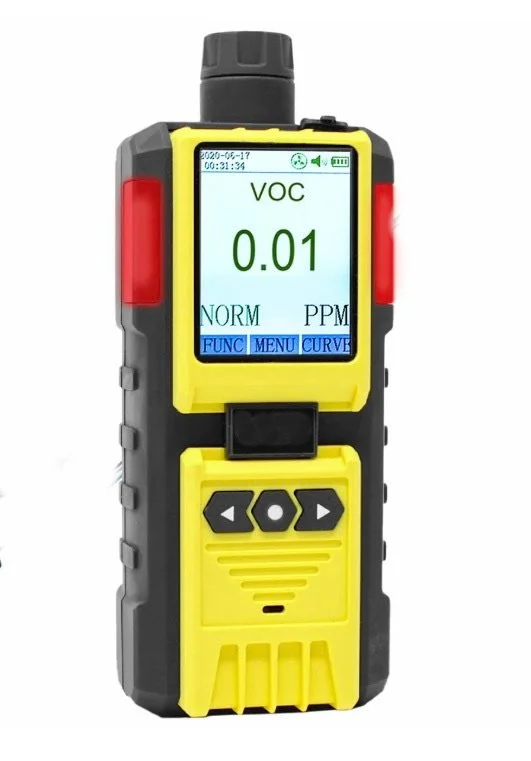
The problem with over-reliance on a VOC meter is that you can have a low reading, but still be surrounded by air that isn’t healthy to breathe. This is partly because it isn’t only gases in the air, like VOCs, that can make air unhealthy. Small particles, sometimes called particulate matter, can also be inhaled and enter the bloodstream.
Many problematic chemicals are considered SVOCs (semi-volatile organic compounds). They don’t evaporate and become a gas as easily as VOCs do. They do, however, attach to airborne particles. Common SVOCs include phthalates (found in plastics, fragrances, and many personal care products), some PFAS chemicals (found in non-stick and water-repellant items), flame retardants (found in electronics, furniture, and building materials), and some pesticides.
Pesticides are an interesting case. Whether pesticide residue will show up on a VOC meter relates not only to whether the active ingredient is a VOC, but also to the rest of the formulation. Most pesticide products are made up of active ingredients and inert ingredients (which serve as solvents or propellants). Often, the inert ingredients are VOCs, so when a pesticide is first applied, a VOC meter may pick it up. Once the solvents dry, however, the active ingredients which remain may not register.
Some problematic substances are neither VOCs nor SVOCs, but their presence in a home or other building can still make it unhealthy. Heavy metals are in this category. The most well-known example of a harmful heavy metal is lead, which can be inhaled in dust.
Air Purifiers
I’m a fan of air purifiers and have them all over my house. There are several reasons that they aren’t a quick and easy solution to chemical contamination, though, including these:
1. They aren’t strong enough to deal with heavy contamination. A Healthline article puts it this way: “Do they really clean your household air? The short answer is yes, but only to a degree.” They add that “when the American Chemical Society tested four consumer-grade portable air cleaners that claimed to remove VOCs from indoor air, researchers found the actual VOC removal to be minimal.” So, yes, they can help, but putting an air purifier in a building that has recently had air fresheners used, or pesticides applied, or has been freshly painted isn’t likely to make it tolerable for someone with chemical intolerance (or actually safe for anyone). Also, the models that are most likely to be helpful are extremely expensive, as are the replacement filters.
2. The filters have to be matched to the contaminants in the building. Gases need to be trapped with activated carbon, and particulates need to be captured with HEPA or similar mechanical filters.
3. The materials used in both air purifiers and replacement filters can be problematic for people with chemical intolerance. A lot of air purifiers are made of plastic, which can cause reactions, especially when new. Some of the filters use glues or other materials that can cause problems for chemically intolerant people. Healthline reports this about the test of air purifiers previously mentioned: “More startling, they found that the ‘cleaned’ air that some of the air cleaners delivered actually contained additional VOCs and other byproducts known to be harmful to human health.”
4. Filters have to be replaced regularly. It’s easy to buy and plug in an air purifier, then neglect to change the filters regularly, either because of cost or just forgetfulness. A machine with a dirty filter can actually sometimes make air quality worse, because what was trapped by the filter can be pushed back into the room. There can also be mold growth on an old filter.
Masks
There are many types of masks and much to be said about their pros and cons. For protection from chemical exposures, there are two basic questions. Do they help, and could they harm?
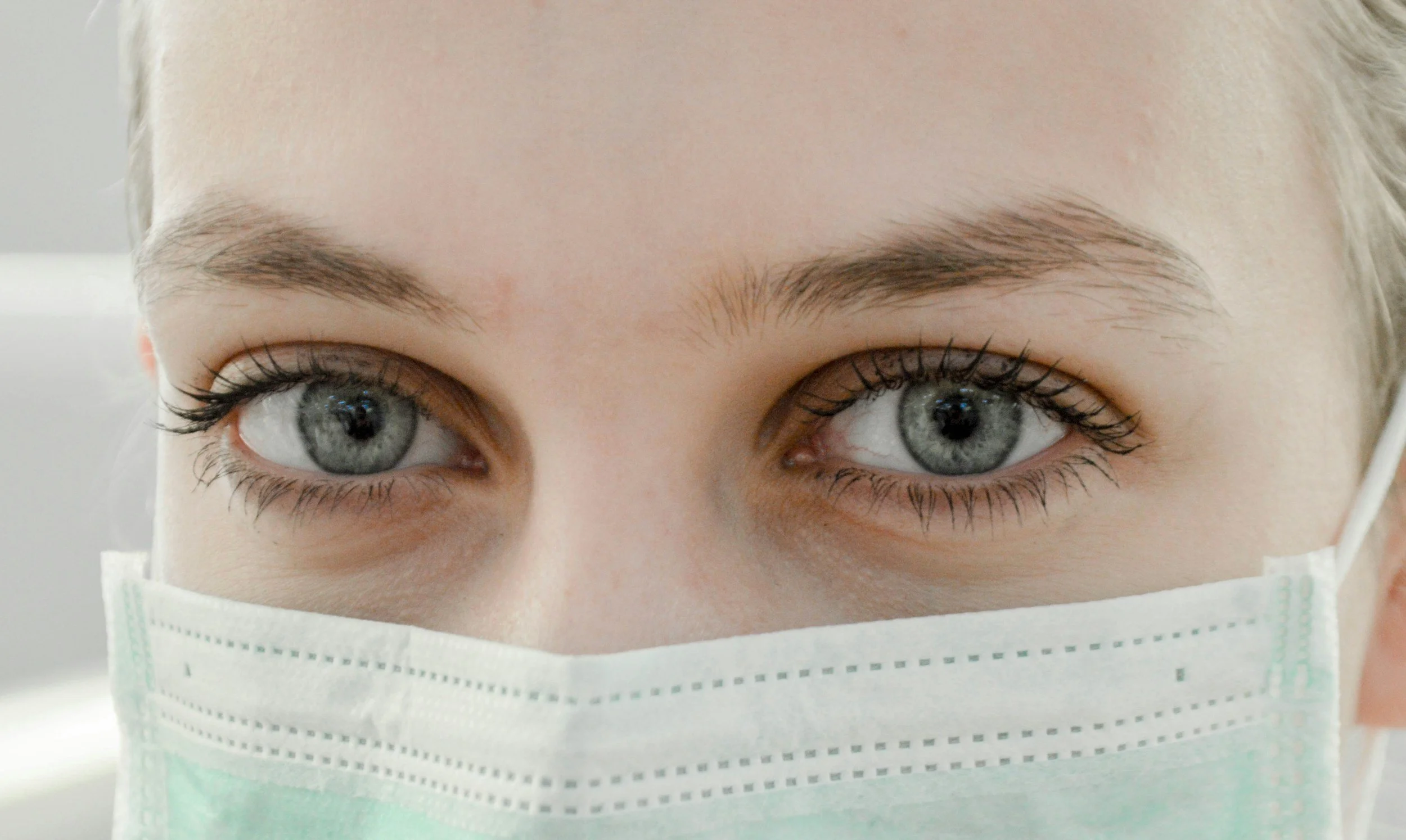
The first question is whether they help. As with the question of air filters, the first question to ask is what you’re trying to trap. Most masks help filter out particulates, some more effectively than others, but don’t work to stop gases, unless they also include activated carbon. To filter gases more thoroughly, some people use cartridge-type respirators.
No matter what type of mask or respirator you choose to use, a major limitation is that they only protect against inhaled toxins. Airborne toxins can also enter your body another way. A very interesting article in The Conversation, entitled Certain indoor air pollutants can be absorbed through the skin reported on a study in which participants were put in a chamber where paint had been applied to hanging plates. The participants entered twice. Once they were exposed to the air only through their skin, and once they were also able to breathe inside the room. The results were that participants showed high intake of phthalates even when only their skin was exposed (and even higher when they also inhaled the chemicals). Other studies found similar results using other chemicals, such as PFAS compounds and nicotine from cigarette smoke.
The article notes that clothing can either help or harm. Clean clothing can be protective, but clothing can also pick up contaminants, serve as a reservoir for them, and then increase exposure when they’re worn.
The second mask-related question is whether they can they be harmful in some situations (such as for use during an entire workday). Many people with chemical intolerance report only being able to use them for short periods of time. The consensus among those who study these things seems to be that surgical-type masks are safe for healthy individuals to wear all day, but surgical masks are of limited use for people with chemical intolerance because they protect against large droplets, but not gases or fine particulates.
The verdict on N95 masks is more nuanced. A study published in JAMA Network found that wearing one for an extended period of time led to a decrease in blood oxygen and pH, which in turn increased heart rate and blood pressure. They note that healthy individuals can compensate for the cardiopulmonary overload, but other populations may not be able to. If you find masks helpful and they cause you no problems, that’s great. If others report they have a different experience, please believe them.
Chemically intolerant people often have the same problem with masks and respirators that they do with air purifiers: they can react to the materials they’re made from. A study on phthalate exposure from masks examined 56 masks and discovered twelve phthalates. The authors note that “50 mask samples could exhibit carcinogenic risks to humans.” Disturbingly, they found that the masks designed for toddlers were the most problematic.
What’s My Point?
The point of this post isn’t to discourage people from using masks, air purifiers, or VOC meters. They can definitely be helpful in certain situations, and I want people to find help and relief however they can. The point I’m trying to make is that they aren’t magic bullets and they definitely aren’t a substitute for what’s sometimes called source control: avoiding the use of toxic products in the first place.
It’s easy to imagine a scenario in which someone truly believes that their home or church or school or business has healthy air because of what their VOC meter says, so they don’t understand why a chemically intolerant person still can’t enter without getting ill. If they have an air purifier running, it could be even harder to understand. The lack of understanding can lead to the conclusion that people are exaggerating or fabricating their condition.
To some degree, the problem is a “can’t you just. . .” issue. “If I wear perfume around you, can’t you just wear a mask? “If I go to the hair salon and then come to your house, can’t you just turn on an air purifier?” Most of us have heard questions like this many times. The word “just” tends to imply that there’s an easy solution that someone, for whatever reason, is choosing not to implement. For people who are only mildly chemically intolerant, using masks and air purifiers can indeed sometimes be enough to allow them to tolerate problematic situations and environments. For many of us, though, it’s definitely not sufficient. Unfortunately, quick and easy solutions don’t exist. I always return to the message that if we want a healthy world, all of us need to avoid using toxic products as much as we possibly can. There’s simply no other real answer.